A rain stone belonging to Leju Io Lugor
Trail - Objects of power and contested power in the Museum of Archaeology and Anthropology
⬅️ Previous page: Introduction
➡️ Next page: An imported knife
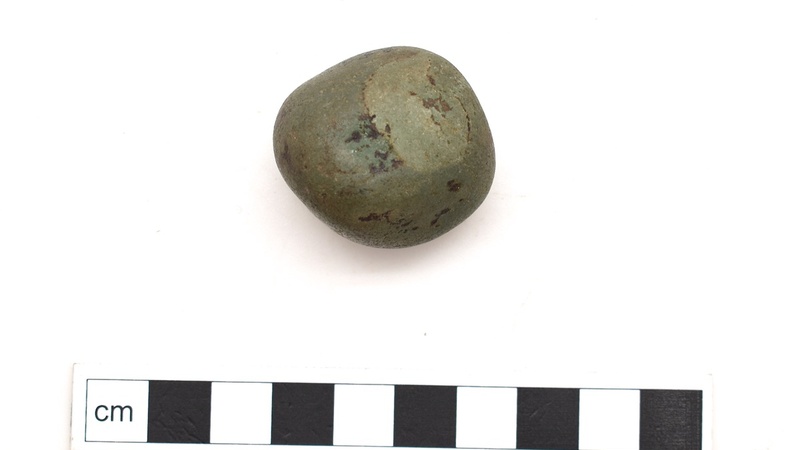
Before colonial administration (1898-1956), Bari people, who live in the area around Juba (the modern capital of South Sudan) were ruled by individuals who could control the weather. Authority was derived from the ability to bring rain. Rain stones were an important part of this craft. Rain makers conducted rituals involving these translucent, sacred stones to bring forth rain.
So important was rain – in the right place at the right time – that areas controlled by rain makers were called their ‘clouds’; and Bari people saw their community as divided by boundaries in the sky, as much as by those on land. But being a rain maker could be a dangerous occupation, drought could result in death, as people took justice into their own hands against those who were thought be withholding the rain.
Given the power of rain makers, it is hardly surprising that early colonial administrators and anthropologists were fascinated by these men and women. Understanding their position, role and influence was thought be essential to understanding (and exploiting) the workings of power in Bari society.
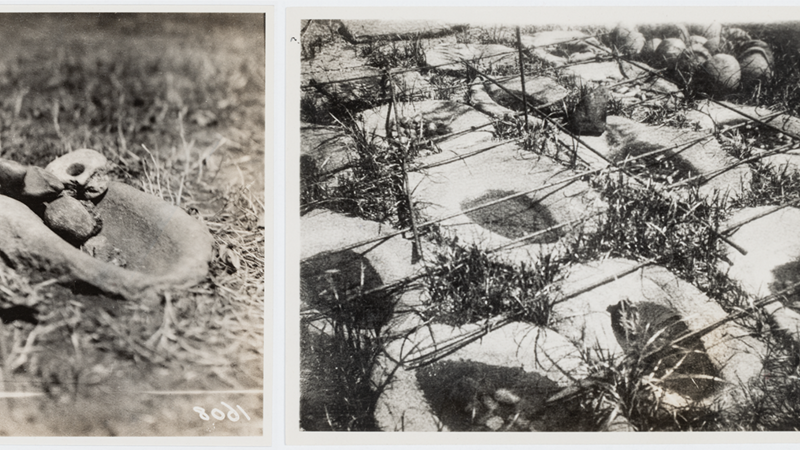
This helps us to understand how and why there is a rain stone in MAA’s collections. This stone was given to the museum by Ernest Balfour Haddon. He was the son of one of the museum’s curators and also a colonial administrator. He acquired the rain stone from one of the most powerful rain makers of the early twentieth century: a man called Leju lo Lugor who was in charge of a rain shrine at Shindiru, the largest of all shrines, said to contain over two hundred rain stones.
Although we do not know exactly how he obtained this stone from Leju, we know that Haddon visited Leju at Shindiru between 1909 and 1910, in the early years of British administration. Several years before, during a drought in 1904, Leju had sought refuge with a previous administrator. Perhaps he saw this gift to Haddon as a way of maintaining relationships with a potentially useful, but unpredictable, foreign power? Perhaps Haddon made a request and Leju felt obliged to fulfil it?