
Mould, Dust and other pathogens
Mould, dust and other pathogens can be found at MAA in collections of plant fibre objects, on the surface of wood and skins, and gourds, and within the storage environment. Mould in particular is more common in Anthropology collections than Archaeology, and most likely on objects which have historically stored food, been coated with a varnish or adhesive, or been exposed to water. Powdery, airborne pathogens like dry mould and dust are primarily hazardous by inhalation and both are known to aggravate respiratory conditions like asthma. This risk can be minimised with use of an FFP face mask and a well-ventilated work space. People with vulnerable immune systems should avoid prolonged exposure to mouldy or dusty environments.
Identification
Mould is most often encountered as a dry, powdery, matt and light-coloured deposit on object surfaces. Dry mould generally remains inactive in conditions under 65% RH though it is more mobile than active mould – which is dark or green in colour, generally well adhered to surfaces and sometimes slimy – and therefore more potentially hazardous to people and objects.
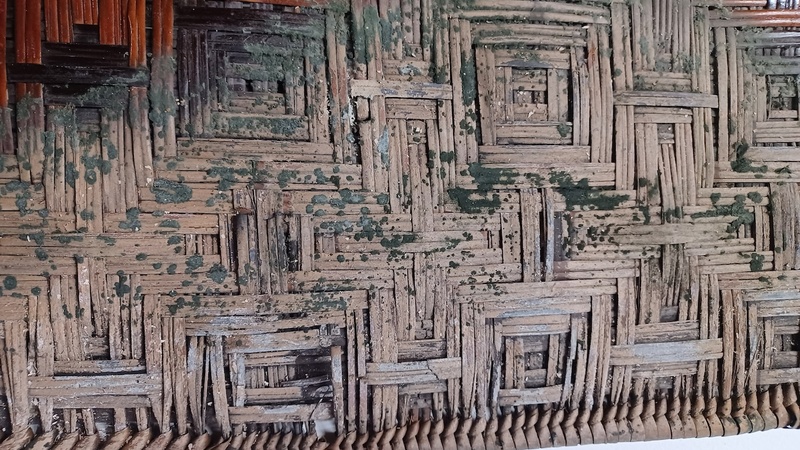
A woven mat (1950.329 A) that has been damaged by a leak in museum storage, showing a combination of recently active mould – generally darker in colour – and dry powdery mould. The surface had been coated to make it glossy and the deterioration of the varnish in water has made it vulnerable to mould activity. The loose mould here was removed by a conservator with a dry brush under HEPA vacuum.
Note: Fatty bloom can be mistaken for mould, dust and even pesticide residues. Unlike the others, fatty bloom is usually greasy and light in colour, and smears under heat or pressure from the finger. Fatty bloom is common on food storage containers as well as on objects from areas with palm oil production.
Other sources for pathogens in the collection include dust – especially fine dust or dust resulting from building works, creosote or local traffic – as well as rodent faeces, preserved soft tissues snd animal dander, especially if they are powdery, flakey or loose. While some of these can be irritating to the skin and eyes, they are generally highest risk through inhalation and chronic exposure.
Safe Handling and Response
Where dry mould, dust or other airborne pathogens are present on objects in the collection, it is suggested to use a face mask. Consult with a conservator or occupational safety officer to check what kind of mask is recommended according to your estimated level of exposure. For most collections work at MAA, a regular FFP mask should be sufficient, or a paper surgical mask if more for comfort than safety. Disposable gloves and protective clothing can also be used to prevent transfer of harmful dusts or residues. Eye protection is also recommended for prolonged exposure to unknown dust.
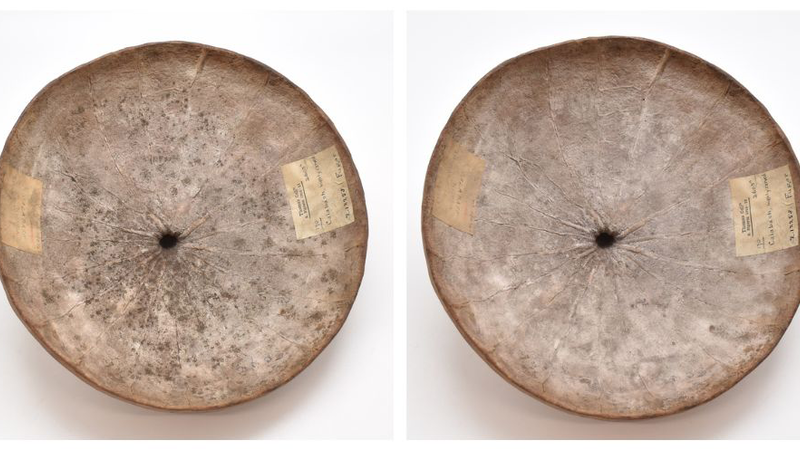
A gourd storage container (Z 12253) with dry mould on the interior surface, before and after treatment. Note that though the presence of dry mould has been reduced by cleaning under a HEPA filter vacuum, it cannot necessarily be eliminated and it is therefore important the object is stored below 65% RH to prevent further growth or activity.
Any evidence of mould should be photographed and labelled, both on object storage materials and within the digital record. If mould is found to be active (e.g. wet or dark in colour), it should first be dried in a well-ventilated area and preferably away from other collections. When dry, loose residues can be removed by a conservator using a HEPA filter vacuum. Once an object has been identified as exhibiting evidence of mould growth - even if the dry mould has been removed - it should continue to be monitored and kept in dry conditions (<65%RH).
In the ‘Special collections and Hazards’ section of the collections management system, an object can be flagged with ‘Mould’, ‘Dust’ or other biological pathogen (‘Biological’). ‘Hazards’ should also be selected if it there are powdery, loose or dusty residues present.
Further Resources
UK Health Security Agency, ‘Understanding and addressing the health risks of damp and mould’, 2024.