
Past exhibitions
Fault Lines: Imagining Indigenous futures for colonial collections
Li Ka Shing Gallery
Through interventions with historic objects, artistic responses, and new research, this exciting exhibition asked how we might cultivate relationships between Indigenous communities and museums around the care of colonial-era collections.

Visit the exhibition page to discover more about Fault Lines: Imagining Indigenous futures for colonial collections.
Beneath Our Feet: Archaeology of the Cambridge Region
Li Ka Shing Gallery
Beneath Our Feet: Archaeology of the Cambridge Region was a fascinating exhibition with displays exploring what local archaeological discoveries can tell us about the lives of those who walked the Cambridgeshire landscape centuries before us.

Visit the exhibition page to discover more about Beneath Our Feet: Archaeology of the Cambridge Region>>
Spotlight on Stores Move
Spotlight gallery
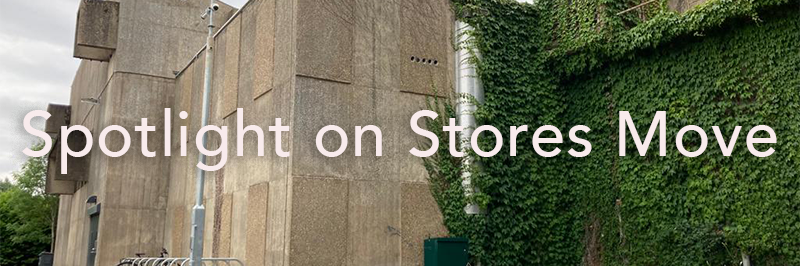
The Stores Move project (2020-2025) aims to move over 250,000 objects from the current off-site stores to the new Centre for Material Culture. Here, they will be safely housed in the historic Cambridge Nuclear Bunker.
The members of the Stores Move team chose the objects in the exhibition to represent the different ways in which they interacted with and cared for the collections. Although their engagements with objects are structured by the requirement of a highly ambitious project, they are also intensely individual.
The team have different specialisms and passions but are united by the desire to give these collections the visibility and care that they deserve. We hope that these objects were the first of many to be exhibited, explored and enjoyed as a result of our work.
COLOUR: Art, Science & Power
COLOUR: Art, Science & Powerwas an exciting exhibition which brought together extraordinary objects and artworks from the arts, humanities and sciences, and showcased remarkable and diverse collections from across the University of Cambridge Museums, libraries and colleges. The displays harnessed the allure and power of colour to inspire reflection and creativity.

Tony Phillips: Civilisation
All galleries
A new installation by British artist Tony Phillips is exhibited amongst existing MAA displays, linking contemporary life with ethnographic collections. As part of the project TAKING CARE - Ethnographic and World Cultures Museums as Spaces of Care, Tony Phillips is the first of two artists in residence at MAA.

Church and the ancestors: Sacred pir mats from Asmat, Papua, Indonesia
Church and the Ancestors told the story of how Asmat people of Papua, Indonesia, have transformed Catholicism.

Pir natal (Christmas mat) showing Mary giving birth in a traditional Asmat forest camp. Collected by Tom Powell Davies in 2018. MAA 2020.15
Feast! In this life and the next
This exhibition illustrated how communal eating during the first century AD played a huge role in the lives of Iron Age people. Drawing on local collections from East Anglia, it highlighted how feasts were an important activity used to celebrate events such as religious festivals or used as a way to simply show off. Not only reserved for the living, grave goods on display demonstrated how the dead also took part in feasting activities.

Detail of a horned animal head at the top of a firedog. Iron Age.
Stanfordbury, Bedfordshire, England. MAA 1883.765.II.3 A.
Photography by Josh Murfitt.
Looms of our Grandmothers, picb’il textiles from Guatemala (16 May – 6 October 2019)
This Spotlight Gallery exhibition focussed on historic and contemporary picb’il textiles from MAA’s collections.

Hand-woven white cotton huipil or woman's blouse (picb'il style). with brocade designs.
Santa Maria de Chirripur cooperative, Alta Verapaz, Guatemala. 21st Century. MAA 2019.5. Photography by Josh Murfitt.
More than Music: Collecting Kun Opera (16 October - April 2019)
This exhibition highlighted Kun or Kunqu, one of the oldest forms of traditional Chinese Opera, through musical instruments associated with it and through creative responses by artists from the UK and China.

A flat paper figure of Nein Chin Feng, a well-known character from Chinese opera. 20th century. China.
MAA 1991.38 A. Photography by Josh Murfitt.
A Survival Story – Prehistoric Life at Star Carr (21 June 2018 – 19 April 2020)
This exhibition focused on the remarkable discoveries made at Star Carr. 11,500 years ago, Star Carr was situated on the shore of a lake. The lake has long since dried up, but some areas are still waterlogged, preserving bone, antler and wooden objects and providing us with a unique perspective of Mesolithic life.

Red-deer frontlet. Mesolithic.
Star Carr, Seamer, Yorkshire, England.
MAA 1953.61 A. Photography by Jocelyne Dudding.
Photographing Tutankhamun (14 June – 23 September 2018)
This exhibition explored the pioneering images taken during the 1920s excavation of Tutankhamun’s tomb, by British photographer Harry Burton.
Swish: Carved Belts & Fibre Skirts of Papua New Guinea (2017)
This exhibition focussed on the material culture of the southeast coast of Papua New Guinea. In addition to fibre skirts and carved belts, it featured historic photos and a new film of singing, dancing and fibre skirt making.

Portrait of a young woman standing with her left foot resting on a half-opened coconut. She holds a crowbar made of from a variety of black palm, which rests inside the coconut.
1925. Opau Village, Gulf Division, Papua New Guinea.
MAA P.45374.ACH2. Photography by Paul de Rautenfeld.
Another India (8 March 2017 to 22 April 2018)
Another India was a unique exhibition exploring the heritage of India’s minority Adivasi (‘original inhabitants’) or Indigenous communities through the collections of the Museum of Archaeology and Anthropology.

Kholwa: The Longing of Belonging (13 June – 10 September 2017)
This exhibition of photographs by the South African photographer, Sabelo Mlangeni, portrayed Zionist Christians in contemporary South Africa. Zionism (unrelated to Jewish Zionism) is the country’s largest popular religious movement – approximately 30% of all South Africans are members of a Zionist church.

‘Ngaphesheya kweHlonyane, Christian New Stone 2015’ by Sabelo Mlangeni
The Island Warrior: Coconut Fibre Armour from Kiribati (4 April – 25 September 2017)
This exhibition focussed on the extraordinary suits of armour made in the small islands of Kiribati, in the Pacific Ocean, throughout the 19th century.

One of the senior students at Rongorongo training college, Beru.
Photographed by Reverend George Hubert Eastman, pre 1925.
MAA P.4912.ACH1
Carriers of Culture: Women, Food and Power from the Congo Basin (October 2016 – March 2017)
This exhibit explored the role of women and food from the Congo basin in the past and today.

Women carrying large loads of kwanga, pre 1905. Democratic Republic of the Congo.
Photography by Rev Kenred Smith.
P.7191.ACH1
Antipodes (22 June – 26 September 2016)
This collaboration between the University of Cambridge Museums and the Australian Print Workshop brought together three of Australia’s most respected contemporary artists Brook Andrew, Tom Nicholson and Caroline Rothwell.

‘Lines that could be scars (no. 1)’, 2015, by Tom Nicholson
Hide and Seek: Looking for Children in the Past (30 January 2016 – 29 January 2017)
Children outnumbered adults for most of human history, yet they rarely appear in the stories that museums tell. This exhibition, the first on the topic, aims to redress the balance.

A medieval funerary monument of a lady with her four sons and eight daughters from Aldenham, Hertfordshire.
MAA Z 22616. Photography by Dave Webb.
Tuniit: Arctic Giants & Ivory Miniatures (January – September 2016)
Exquisite sculptures, a thousand years old, were on display in the Micro Gallery until September 2016. They were created by pre-Inuit people living in the region of present day Igloolik in the Canadian territory of Nunavut.

A walrus ivory carving of man carrying a child.
Dorset culture. Collected and donated by Graham Rowley. Abverdjar, Foxe Basin, North West Territories, Canada.
MAA 1950.405.
Photography by Jocelyne Dudding.
River Stars Reindeer (23 June – 27 September 2015)
Imaging Evenki & Orochen communities of Inner Mongolia & Siberia

“A shaman, a shamaness, and a Achinsk Lama with their helpers.” Deliun ulus, Urul’chin volost’, Zabaibail oblast’, June 1912.
Siberia. Photography by Sergei Shirokogoroff.
AMAE 2002-055.
Sounding out the Morning Star: Music and West Papua (10 March – 22 November 2015)
This exhibition focussed on sound and music in West Papua (the western half of the island of New Guinea), both in the past and present. It drew together objects, sounds and birds collected by Alexander F. R. Wollaston in the early years of the twentieth century. There were also personal items such as a bird of paradise feather headdress and ukulele, on loan to the Museum from The Lani Singers, a West Papuan group living in exile in the UK who use music to draw attention to their struggle for independence from Indonesia.

Tartan: Its Journey through the African Diaspora (17 – 22 March 2015)
Tartan was a community-curated project by the Costume Institute for the African Diaspora, supported by the Heritage Lottery Fund. It came to MAA following a successful run at Craft Central in Clerkenwell and the Victoria and Albert Museum. The exhibition featured examples of how tartan has been used and re-imagined from Africa to the Caribbean and back to the UK.

The Power of Paper: 50 years of printmaking from Australia, Canada and South Africa (14 February – 6 December 2015)
This exhibition comprised a revelation of eloquent art made by black and indigenous artists since the 1960s. Inspired by environments from the Arctic to the Australian desert, from the country and the city, it foregrounds visions of place, custom and history, in settings that are at once profoundly different, yet linked by empire and the politics of decolonization.
Magic and Memory: Paul Montague in New Caledonia (9 September 2014 – 8 March 2015)
This exhibition was a small display remembering Cambridge zoologist Paul Montague and his research in New Caledonia.

Archival giclee print by Rebecca Jewell, of a BE12 plane titled 'The Bird Man of Salonika'. The print has been collaged over with bird feathers, upon which are printed musical instruments, birds, birds' eggs, Kanak artefacts and images of Paul Denys Montague. He collected and/or made the objects represented on the feathers. 2014. MAA 2015.1.
Crafting Colour: Beads, Pattern and Painting from the Kalahari (24 June – 28 September 2014)
Contemporary prints and paintings produced in western Botswana over the last twenty five years feature in the Museum of Archaeology and Anthropology’s summer South Lecture Room exhibition.

Buddha’s Word: The Life of Books in Tibet and Beyond (28 May 2014 – 17 January 2015)
Buddha’s Word was the first museum exhibition of Tibetan material in Cambridge, and the first time in the Museum of Archaeology and Anthropology’s history that its Buddhist collections will be showcased in an exhibition.
Tapa: Barkcloth paintings from the Pacific (25 March – 19 April 2014)
This exhibition drew upon the Museum’s world-class collection of barkcloth, dating from the eighteenth century to the present day. Exceptional barkcloths, rarely displayed, were featured including two works by women of the Omie community of Papua New Guinea, acquired in 2012 with the support of the Art Fund and other donors.

Large barkcloth.
Cook Islands, Aitutaki. Late 19th Century. MAA E 1901.123.
Photography by Simon Hawkins.
Chiefs & Governors: Art and Power in Fiji (7 June 2013 – 19 April 2014)
This was the first ever exhibition dedicated to Fijian Art outside Fiji. It drew on MAA’s exceptional collection of Fijian artefacts, photographs and archives, a collection closely linked to the early colonial history of Fiji and the foundation of the Museum.

Human-shaped figures and pendants of whale ivory strung on fine plaited coir cords. Probably presented to Lady Gordon, 1875 - 80, Fiji.
MAA Z 2752. Photography by Jos Dudding.
Discoveries: Art, Science and Exploration (31 January – 27 April 2014)
Presenting singular objects and unearthing little-known treasures in the extraordinary interiors of Two Temple Place on London’s Embankment, Discoveries was the first major exhibition to bring together the fascinating collections from all eight University of Cambridge Museums.
Gióng (28 October – 2 November 2013)
Gióng,by renowned artist Nguyễn Tư Nghiêm, travelled from the Vietnam Museum of Fine Arts in Hanoi to Cambridge, in celebration of 40 years of Diplomatic Relations between Vietnam and the UK. The painting was on display alongside other great works of art from across the world.
The Lost World (Part 2) (23 October – 30 November 2013)
The Lost World (Part 2) was a solo exhibition by Julie Gough simultaneously installed in the Museum of Archaeology and Anthropology and at Contemporary Art Tasmania (CAT), Hobart. The exhibition featured Gough’s 2013 video work The Lost World (Part 2) projected in the Andrews Gallery and opposite the façade of the Museum on Downing Street.
Origins of the Afro Comb: 6,000 years of culture, politics and identity (2 July – 28 September 2013)
This exhibition explored the extraordinary 6,000-year history of African hair combs. It was a joint exhibition between the Fitzwilliam Museum and MAA.
The Cultured Rainforest (4 April – 1 June 2013)
An international team of archaeologists, anthropologists, and historical ecologists conducted research in the Kelabit highlands of Borneo from 2007- 2010 to study how people have transformed rainforests and vice versa by working closely with local Kelabit and Penan people.
The Cultured Rainforest brought the results of this cutting-edge research to a British audience.
Tall Stories: Cannibal Forks (15 September – 31 October 2010)
This exhibition was in two parts. The first was an intervention entitled ‘Tall Stories: Cannibal Forks’, which was on display in the Maudslay Gallery next to the Fiji cabinet. The second version of the artwork included the cannibal forks made at ‘Cannibal Forking’ events which had been accessioned by the Museum.
Unlimited Global Alchemy (23 June – 18 August 2012)
Unlimited Global Alchemy was a collaborative exhibition project spearheaded by artist Rachel Gadsden (UK). Working with the Bambanani artist-activist Group (South Africa), they explored the psychology and politics of HIV/AIDS and of life-giving medical regimes as part of the London 2012 Festival.
PITOTI (7 – 23 March 2013)
• P • I • T • O • T • I • was a multimedia digital rock art exhibition which originated from years of research by Dr Christopher Chippindale and Dr Frederick Baker of the Cambridge Univeristy Prehistoric Picture Project. It explores the links between the world of Archaeology and the world of film, digital humanities and computer vision.
Gifts and Discoveries (25 May 2012 – 16 February 2013)
Gifts & Discoveries was the first special exhibition in MAA’s new Li Ka Shing Gallery. It tells the stories behind some of the outstanding artefacts in the Museum’s collection and traces their journeys to Cambridge.
Creativity in the Bronze Age – a response (2 April – 30 June 2013)
This was an intervention into MAA’s experimental World Archaeology Gallery by a group of seven contemporary craft artists, ranging from artist jewellers to potters. Their work, which is displayed in and around six of the museum’s recently refurbished hundred-year-old display cases alongside Bronze Age items from the museum’s collection, is a direct expression of their engagement with the creativity and craft of the European Bronze Age, c. 2500 – 800 BC.
Arctic Passages (14 March - December 2008)
This exhibition sought to represent the points of interaction between the Inuit and the Wordie Expeditions, and their contrasting approaches to the environment they shared, however temporarily.
SAPMI
This exhibit was developed through cooperation between MAA staff, Sami colleagues in Sweden, and MPhil and doctoral students in Social Anthropology at Cambridge.
Assembling Bodies (10 March 2009 - 6 November 2010)
Assembling Bodies: Art, Science & Imagination aims to challenge pre-conceived notions about the human body. This innovative, multi-disciplinary exhibition examines ways that bodies are constructed, known and transformed in various historical, cross-cultural and disciplinary contexts. It invites visitors to explore various technologies through which different bodies are known and made visible.